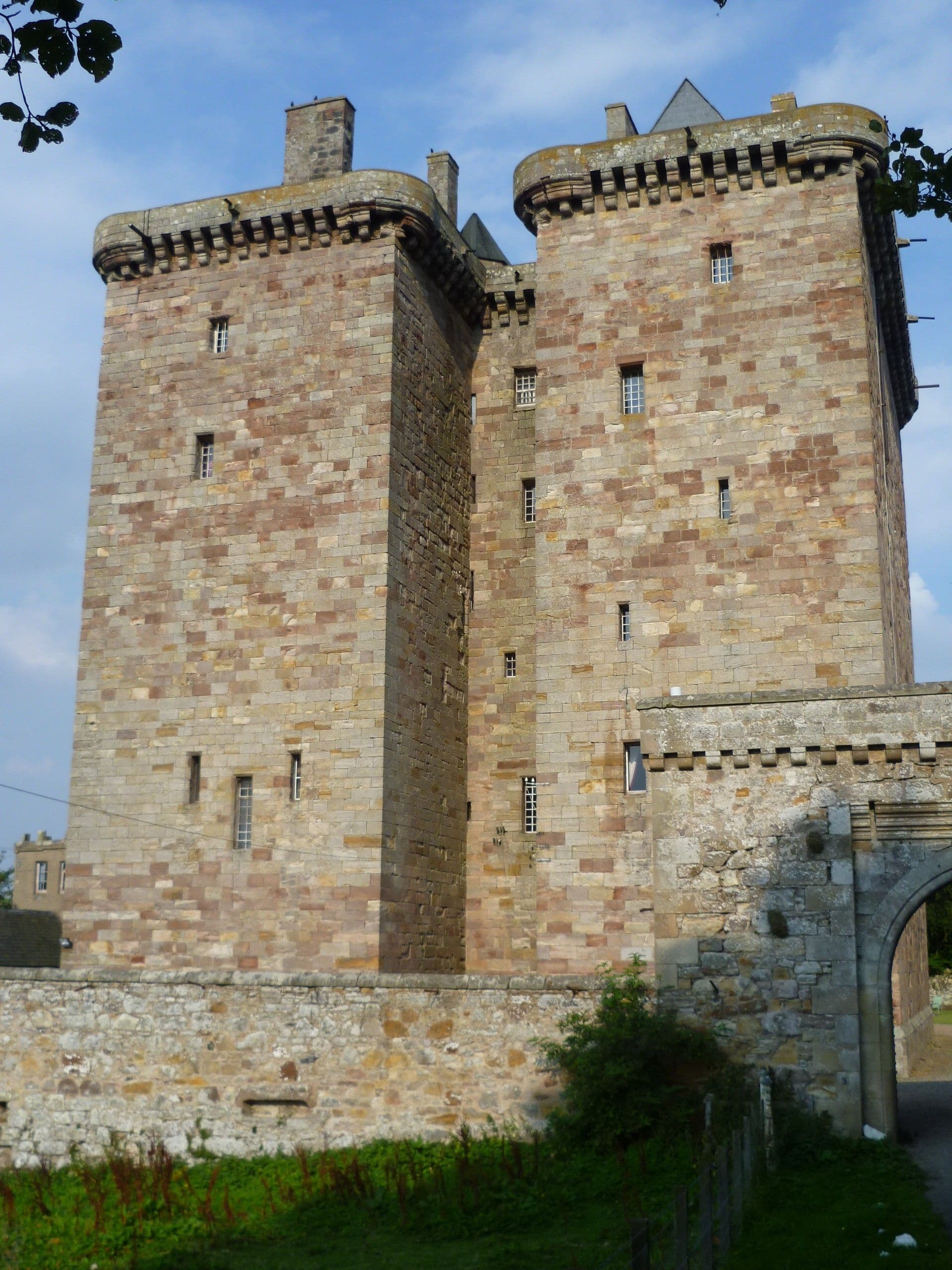
The fortified tower house was the classic Scottish solution to the problem of building defensible structures in a country where warfare was endemic for centuries. The Scottish Lowland landscape is peppered with many fine examples, to the extent that the 16thC historian, John Major, could write,
"There are in Scotland for the most part two strongholds to every league, intended both as a defence against a foreign foe, and to meet the first outbreak of a civil war." (History of Greater Britain, 1521).
Scotland's Stewart monarchs explicitly forbade the Scottish nobility to imitate the fortifications of their royal castles. Most 'castles' in Scotland are in fact tower houses which have been expanded by additional ranges which can often conceal the original tower at first sight. Borthwick is a unique example of twin towers.

Borthwick Castle

Midlothian, the Scottish Borders
Scotland

Castle in Midlothian, Scotland

Key Information

Construction

c. 1430

Castle Type

L-plan castle

Current Status

Site

Historical Overview

Borthwick Castle is one of the largest and best-preserved surviving medieval Scottish fortifications. It is located twelve miles (19 km) south-east of Edinburgh, to the east of the village of Borthwick, on a site protected on three sides by a steep fall in the ground. It was constructed in 1430 for Sir William Borthwick, from whom the castle takes its name, Panoramic views of the castle can be seen from the Borders Railway between Edinburgh Waverley and Tweedbank railway stations.

Advertisement

Help Improve This Page

Help to document and preserve British castle heritage for future generations.

Share your photographs

Write and review content

Support the project

Learn more